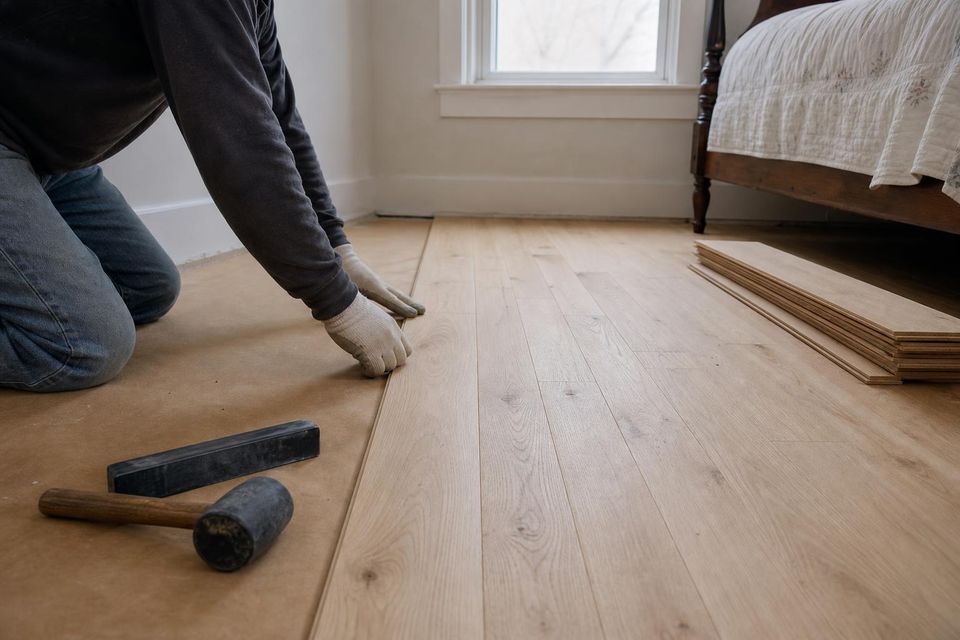
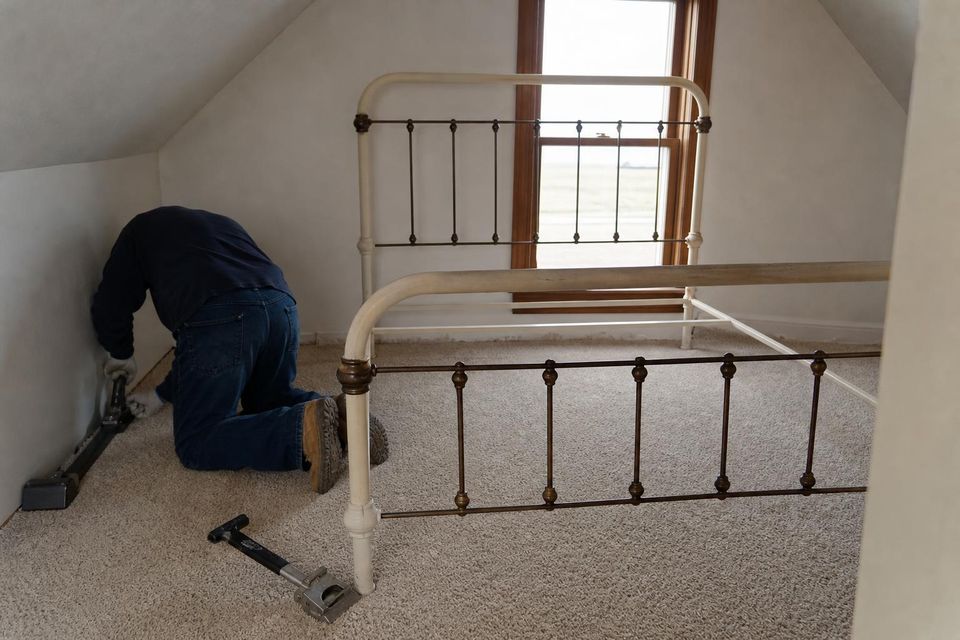
A new floor makes sense when the existing one has little life left: boards that have been sanded thin, wide gaps across the whole room, a patchwork of materials from past changes, or a room that was only ever covered with old sheet goods. It also makes sense when you simply want a different floor, such as wood in a room that has always been carpeted, or carpet in a cold upstairs bedroom.
Before we suggest replacing anything, we check whether the floor you already have can be saved. A solid oak floor with plenty of wood left is often a better candidate for refinishing, and we will say so.
Choosing between wood and carpet
Main floor rooms that see boots, chairs and pets usually do well with hardwood. It is easy to sweep, it can be refinished later, and it ties the rooms of an older house together. Upstairs bedrooms, dens and kids' rooms often suit carpet, which is warmer underfoot and quieter for the rooms below.
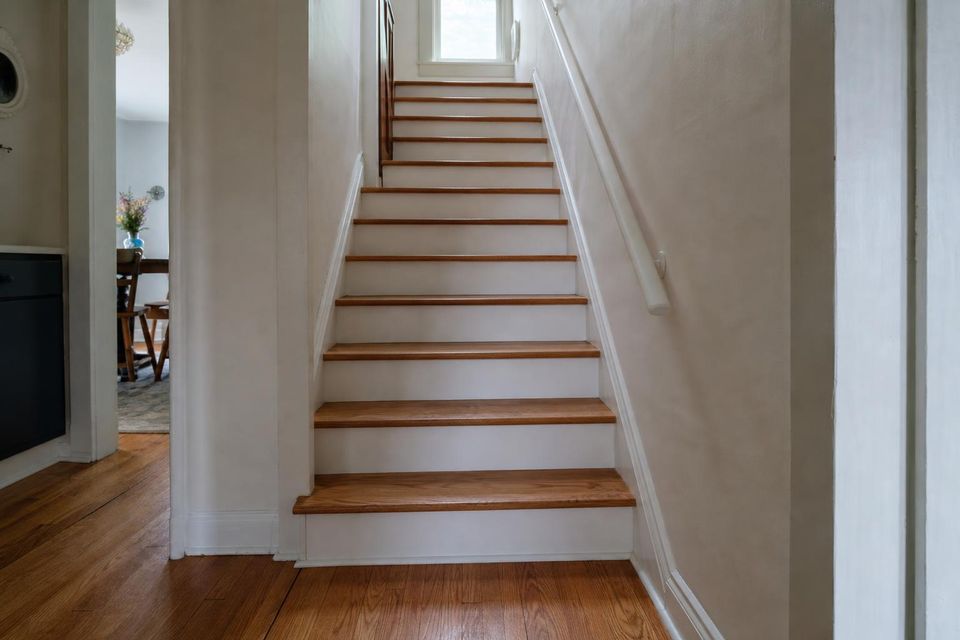
Many houses end up with both: oak on the main floor, carpet in the bedrooms and oak treads on the stairs between them. We plan where each floor stops and which threshold goes in each doorway so the change feels deliberate.
What every new floor job includes
Every new floor starts with lifting the old covering and preparing the base, because a floor is only as flat and quiet as what is under it. We finish with new or reset trim, thresholds at each doorway and a walk through together. The written estimate lists all of it before you decide.
If the new floor meets stairs, we usually plan the treads and nosing at the same time, so the color runs from the main floor up the steps without a break. If a bedroom is getting carpet, we set the thresholds when the wood goes in, so both floors finish at the same line in the doorway.
Cookies. Necessary cookies keep the site running. Analytics and advertising cookies are used only if you allow them. Cookie Policy
Cookie Settings
Choose which optional cookies this site may use. Your choice is kept for 180 days. A Global Privacy Control signal from your browser is treated as a rejection of optional cookies.
Strictly necessaryAlways on
Keep the site working and secure and remember your cookie choice.
Help us see which pages are used. Off unless you turn it on.
Measure whether an ad led to a visit request. Off unless you turn it on.
Your browser sends a Global Privacy Control signal, so optional cookies stay off.